Clarity is not something leaders simply “have.”
It is not charisma.
It is not conviction.
It is not confidence in a room.
Clarity is something systems are designed to produce.
And when it is not designed, confusion fills the gap.
The myth of the clear leader
Many organizations believe clarity lives in people.
They look for:
- Visionary founders
- Decisive executives
- Strong communicators
When things feel misaligned, they assume the problem is leadership style, messaging, or tone.
But clarity that lives only in a person’s head does not scale.
It dissolves at handoffs.
It fractures across teams.
It fades with time, growth, and distance.
If clarity cannot survive the absence of its original holder, it was never truly designed.
Confusion is not a people problem
When teams feel misaligned, the reflex is to blame execution.
“We need better communication.”
“We need alignment meetings.”
“They didn’t understand the vision.”
But persistent confusion is rarely a communication failure.
It is a design failure.
Confusion emerges when intent is implicit instead of explicit.
When decisions are made but not encoded.
When tradeoffs are felt but never named.
In those conditions, people are forced to guess.
And when people guess inside systems, effort replaces clarity.
Clarity must be visible to be real. – Omair Ali
Systems teach faster than words
Every system is a teacher.
It teaches through:
- What it measures
- What it rewards
- What it quietly ignores
- What it tolerates
People learn far more from what the system allows than from what leadership says.
If speed is rewarded, people optimize for speed.
If output is rewarded, people optimize for output.
If surface metrics are rewarded, depth erodes quietly.
The prompting illusion
This is not a failure of character.
It is a predictable response to design.
One of the clearest examples of this shows up in how people use AI.
Two people can use the same AI system and get wildly different results.
Not because one is smarter.
Not because the tool is better.
But because the system is responding precisely to what it was asked to do.
AI does not infer depth.
It reflects clarity.
When prompts are vague, outputs sprawl.
When intent is unclear, the system fills the gaps with assumptions.
This is often described as “garbage in, garbage out.”
But the deeper truth is this:
The quality of the output reveals the quality of the intent encoded into the system.
AI makes this visible because it removes the human buffer.
There is no intuition.
No context filling.
No emotional compensation.
Just reflection.
The same thing happens inside organizations.
When intent is implicit, teams guess.
When goals are loosely defined, execution fragments.
When tradeoffs are unstated, people optimize for the wrong thing.
Clarity was never a personality trait.
It was always a system input.
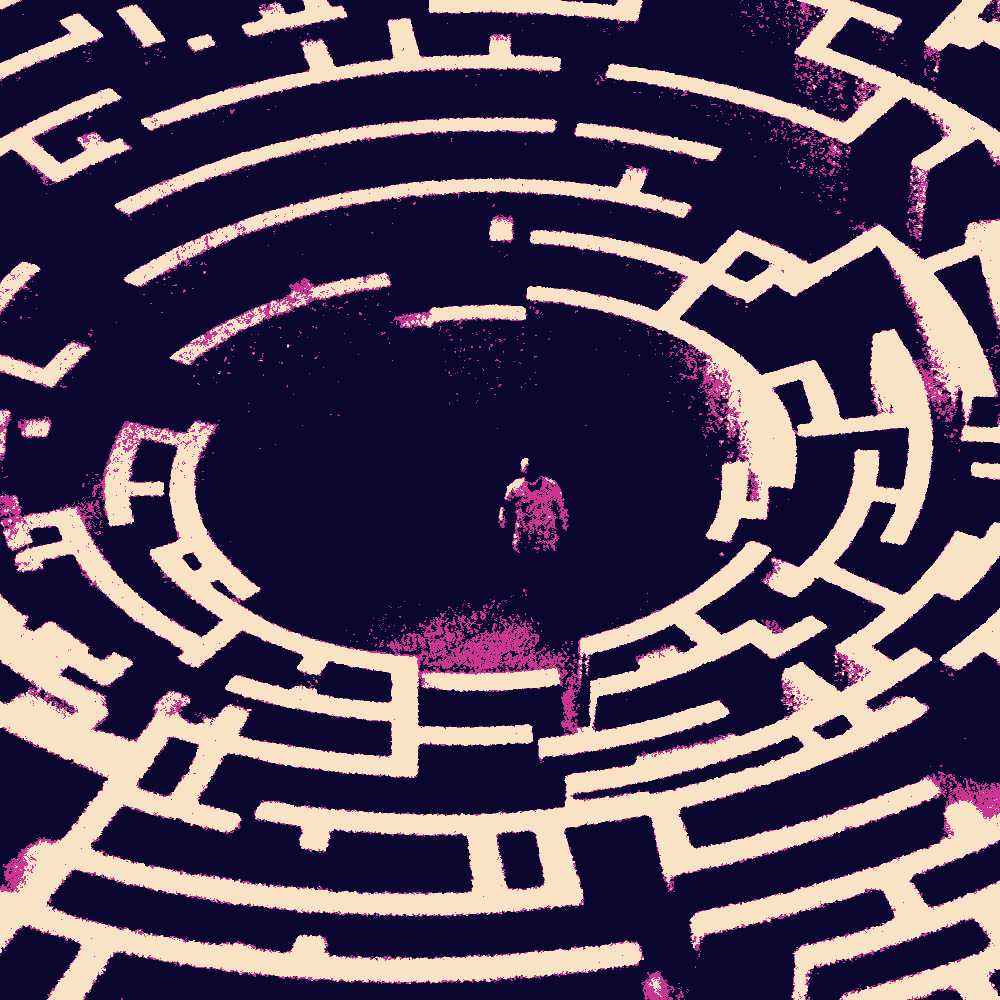
Inherited ambiguity
Systems do not only affect the people who build them.
They are inherited.
New hires inherit ambiguity.
Customers experience it.
Future teams normalize it.
When intent is not made explicit, confusion becomes transferable.
Over time, the system begins to feel heavy.
Not because the work is hard, but because the reasoning is unclear.
People spend energy navigating uncertainty instead of creating value.
Clarity is how intent survives scale
Intent without structure is fragile.
It depends on memory.
On proximity.
On constant reinforcement.
Designed clarity allows intent to outlive individuals.
It survives:
- Growth
- Turnover
- Distance
- Time
This is why design matters beyond aesthetics.
Design is how values become operational.
It is how intent becomes durable.
Where Deepwake stands
Deepwake works with organizations to make intent explicit before execution.
Not through slogans.
Not through decks alone.
But through:
- Clear decision-making frameworks
- Thoughtful constraints
- Systems that reinforce values instead of undermining them
Clarity is not a personality trait.
It is a structural outcome.
What comes next
Even when intent is clear, systems can still fail.
Not because clarity was missing, but because it was never protected.
In the next post, we explore what happens when good intentions collapse at scale, and why values decay when they are not designed to survive pressure.
👉 Coming soon: When good intentions collapse at scale